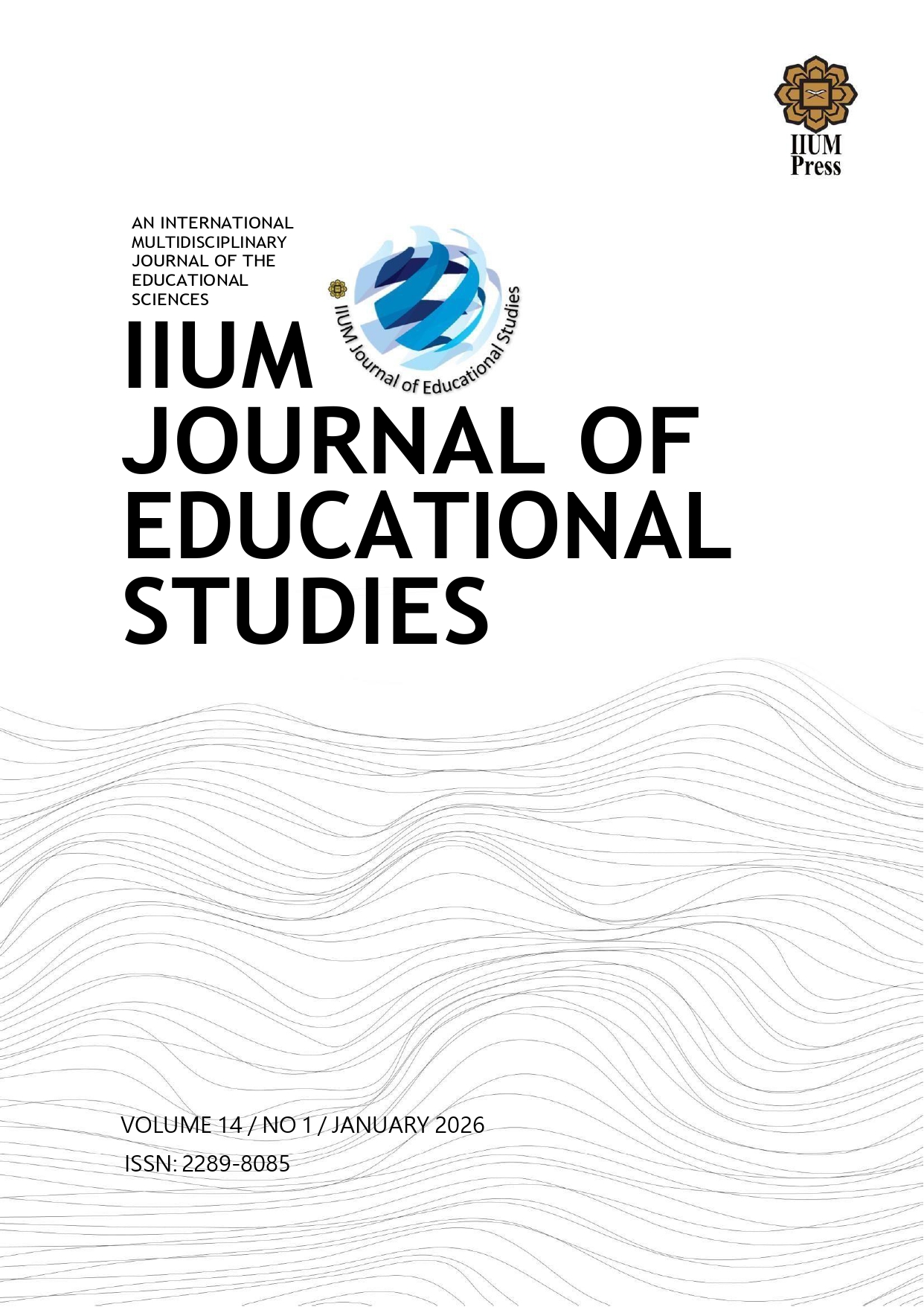
Validating and Profiling Lifelong Learning Attributes among Academic Staff in Malaysian Islamic Tertiary Institutions
DOI:
https://doi.org/10.31436/ijes.v14i1.650Keywords:
Lifelong learning attributes, Islamic higher education, Islamic epistemology, exploratory factor analysis, confirmatory factor analysisAbstract
This study validates and profiles lifelong learning attributes (LLLA) among academic staff in Malaysian Islamic tertiary institutions. To address the absence of context-sensitive measures that integrate Islamic epistemological principles with contemporary lifelong learning theory, a cross-sectional survey was administered to 294 academic staff from two Islamic universities using a five-point Likert-scale instrument. Exploratory factor analysis (EFA) and confirmatory factor analysis (CFA) were used to examine the psychometric structure of the LLLA construct. The analyses supported a reliable five-factor, 20-item model encompassing goal setting, application of knowledge and skills, self-direction and evaluation, locating information, and adaptable learning strategies. The model demonstrated satisfactory fit indices, strong internal consistency, and clear evidence of convergent and discriminant validity. Descriptive findings indicated generally high levels of LLLA, with the exception of locating information, which showed comparatively lower scores. The study contributes novel insights by developing and validating an Islamically informed measurement model for lifelong learning in higher education, thereby extending Knapper and Cropley’s framework into an Islamic tertiary context. The validated instrument provides a robust tool for assessing LLLA and offers actionable evidence to support academic staff development and institutional planning within Islamic higher education.
Metrics
Downloads
Published
How to Cite
Issue
Section
License
Copyright (c) 2026 IIUM Press, International Islamic University Malaysia

This work is licensed under a Creative Commons Attribution 4.0 International License.
The Journal will own copyright to all published works and have the right of first publication, both in print and online, unless other arrangements are made with the Editors in advance. It is the author`s responsibility to ensure that where copyright materials are included within an article the permission of the copyright holder has been obtained beforehand.