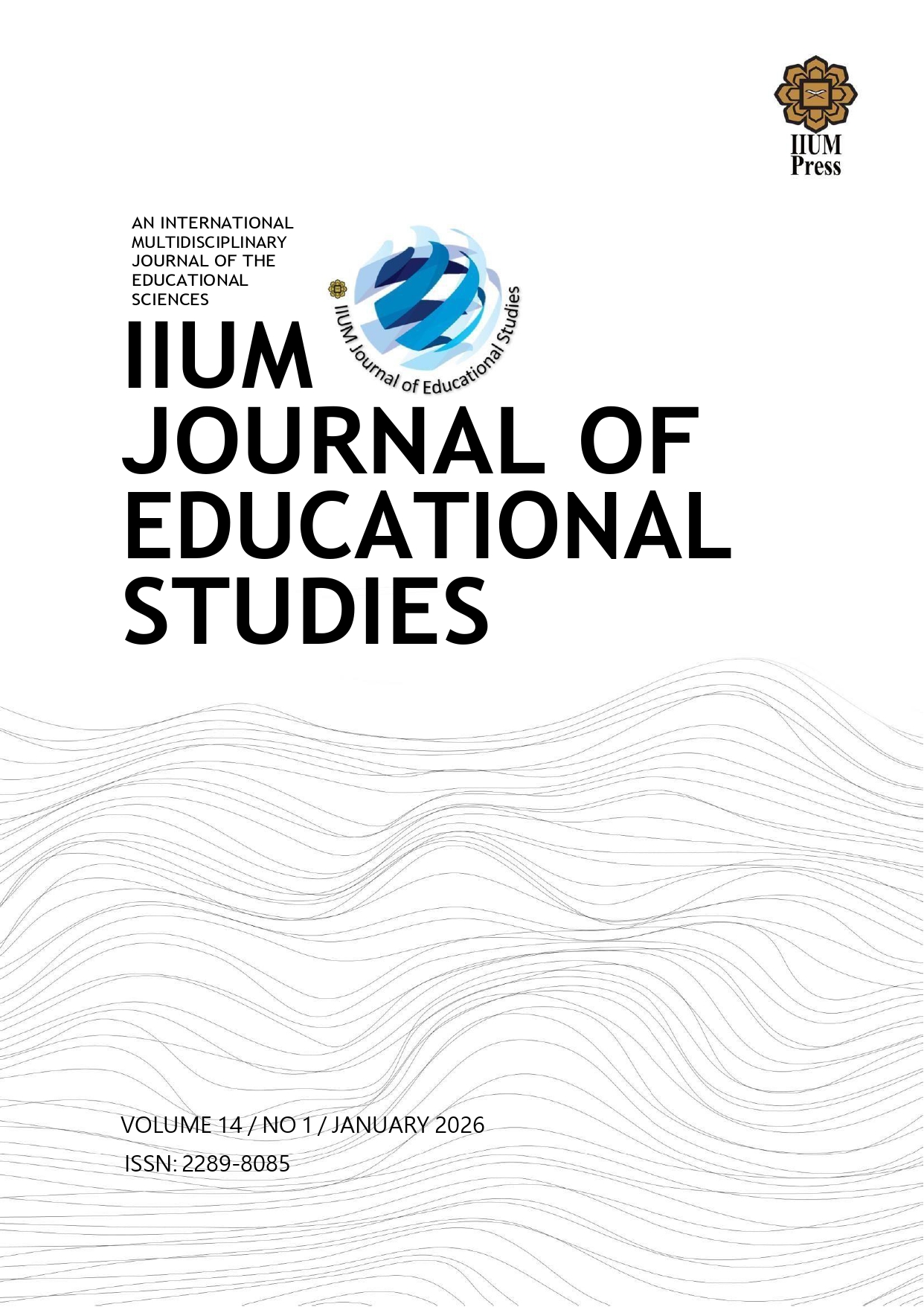
The Influence of Parental Educational Expectations on Children's School Readiness
DOI:
https://doi.org/10.31436/ijes.v14i1.643الكلمات المفتاحية:
Kindergarten children، parents’ educational expectations، school readiness، multinomial logistic regression، stratified random samplingالملخص
This study examines the relationship between parents’ educational expectations and children’s school readiness, given the crucial role the former plays in the latter. The sample included 482 kindergarteners and 482 parents from Semarang City and Semarang Regency, Indonesia, who were selected using stratified random sampling. Data were collected using the Nijmeegse Schoolbekwaamheids Test (N.S.T.), which demonstrated an internal consistency of .87, and the Parents’ Educational Expectations Scale, which comprises academic, social, athletic, art, and compliance domains, with reliability coefficients of .86, .52, .40, .50, and .77, respectively. The data were analysed using multinomial logistic regression analysis. The results showed that parents’ educational expectations in the academic, athletic, and art domains had significant main effects on children’s school readiness, χ² (2) = 43.099, p < .05; χ² (2) = 8.477, p < .05; and χ² (2) = 51.446, p < .05, respectively. However, expectations in the social and compliance domains did not make a meaningful contribution to children’s school readiness. These findings provide evidence that parents’ expectations in the academic, athletic, and art domains contribute to the development of skills required for school readiness. The study further suggests that parents who hold expectations in these three domains are more likely to encourage relevant activities, thereby enhancing their children’s readiness for school. In contrast, parents’ expectations in the social and compliance domains, which represent more fundamental life skills, do not appear to be directly related to the acquisition of skills necessary for school readiness.
المقاييس
التنزيلات
منشور
كيفية الاقتباس
إصدار
القسم
الرخصة
الحقوق الفكرية (c) 2026 IIUM Press, International Islamic University Malaysia

هذا العمل مرخص بموجب Creative Commons Attribution 4.0 International License.
The Journal will own copyright to all published works and have the right of first publication, both in print and online, unless other arrangements are made with the Editors in advance. It is the author`s responsibility to ensure that where copyright materials are included within an article the permission of the copyright holder has been obtained beforehand.