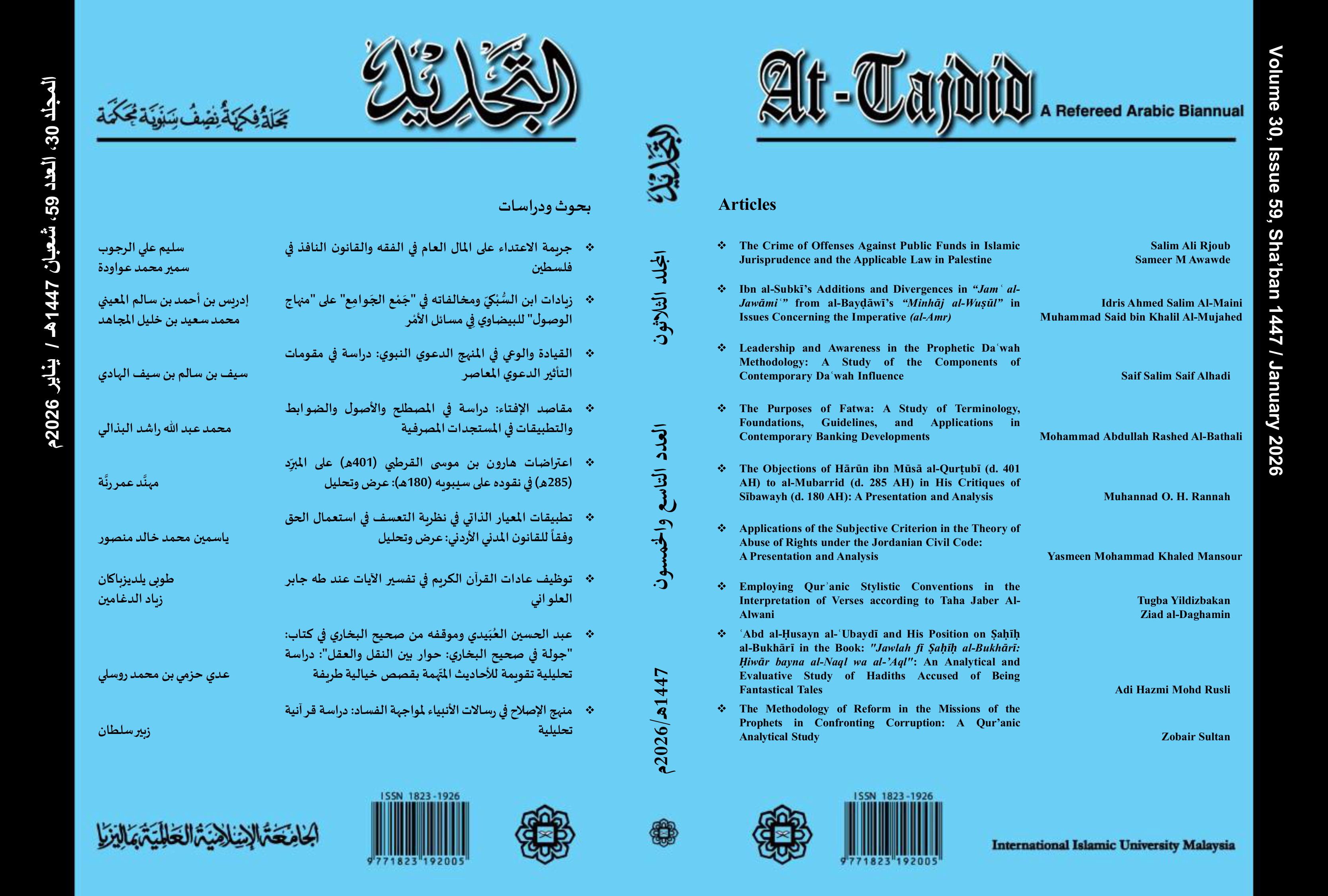
القيادة والوعي في المنهج الدعوي النبوي: دراسة في مقومات التأثير الدعوي المعاصر
(Leadership and Awareness in the Prophetic Daʿwah Methodology: A Study of the Components of Contemporary Daʿwah Influence)
Abstract
Abstract
This study examines the daʿwah methodology in the Prophetic biography through an analytical investigation of the formation of the preacher’s character, drawing on the model of the Prophet Muḥammad ﷺ in conveying the divine message and confronting challenges. The research problem arises from the question of the essential qualities that a Muslim preacher must possess in order to be effective and successful across different times and contexts, and how these qualities may be derived from the Prophetic biography to address the challenges of contemporary daʿwah practice. The study aims to analyse the leadership qualities, formative and professional competencies, situational awareness, and ethical attributes that constituted the foundation of the success of the Prophetic mission, while presenting a practical model from which contemporary preachers may benefit. The research adopts an inductive–analytical approach in tracing Prophetic practices, alongside a critical approach that relates these qualities to the realities of present-day daʿwah work. The study arrives at several key findings, most notably that the success of daʿwah cannot be achieved solely through the possession of religious knowledge; rather, it requires the comprehensive development of the preacher’s character, grounded in steadfastness to principles, patience, informed leadership, an understanding of the nature of differences, and adherence to ethical standards in daʿwah. It further concludes that situational awareness and sensitivity to the conditions of the audience constitute two decisive elements in renewing daʿwah discourse and enhancing its impact, and that a return to the Prophetic methodology is capable of addressing many of the deficiencies evident in contemporary daʿwah practice.
Keywords: leadership; patience; situational awareness; ethics; steadfastness; compassion; coexistence.
Downloads
References
al-ʿArwī, ʿAbd Allāh, al-Īdiyūlūjiyyā al-ʿArabiyyah al-Muʿāṣirah (Beirut: al-Markaz al-Thaqāfī al-ʿArabī, 1995)
al-Bayhaqī, Aḥmad b. al-Ḥusayn, al-Ādāb (Beirut: Dār al-Kutub al-ʿIlmiyyah, 1st edition, 1990)
al-Bayhaqī, Aḥmad b. al-Ḥusayn, Shuʿab al-Īmān (Beirut: Dār al-Kutub al-ʿIlmiyyah, n.e., n.d.)
al-Bukhārī, Muḥammad b. Ismāʿīl, al-Jāmiʿ al-Ṣaḥīḥ, ed. Muḥammad Zuhayr al-Nāṣir (Beirut: Dār Ṭawq al-Najāh, 1st edition, 2001)
al-Jābirī, Muḥammad ʿĀbid, Naqd al-ʿAql al-Gharbī (Beirut: Markaz Dirāsāt al-Waḥdah al-ʿArabiyyah, 1995)
al-Nadwī, Abū al-Ḥasan ʿAlī al-Ḥasanī, al-Sīrah al-Nabawiyyah (Damascus: Dār Ibn Kathīr, 3rd edition, 2001)
al-Qurṭubī, Muḥammad b. Aḥmad, al-Jāmiʿ li Aḥkām al-Qurʾān (Beirut: Dār al-Kutub al-ʿIlmiyyah, n.e., n.d.)
al-Rāzī, Fakhr al-Dīn, Mafātīḥ al-Ghayb (Beirut: Dār Iḥyāʾ al-Turāth al-ʿArabī, n.e., n.d.)
al-Saʿdī, ʿAbd al-Raḥmān b. Nāṣir, Taysīr al-Karīm al-Raḥmān fī Tafsīr Kalām al-Mannān (Riyadh: Dār al-Salām, n.e., n.d.)
al-Shaʿrāwī, Muḥammad Mutawallī, Khawāṭir fī Tafsīr al-Qurʾān (Cairo: Akhbār al-Yawm, n.e., n.d.)
al-Ṭabarī, Muḥammad b. Jarīr, Jāmiʿ al-Bayān ʿan Taʾwīl Āy al-Qurʾān, ed. Aḥmad Shākir (Cairo: Dār al-Maʿārif, n.e., n.d.)
al-Ṭabarī, Muḥammad b. Jarīr, Tārīkh al-Umam wa al-Mulūk (Beirut: Dār al-Turāth, n.e., n.d.)
al-Tirmidhī, Muḥammad b. ʿĪsā, al-Jāmiʿ (Sunan al-Tirmidhī), ed. Bashshār ʿAwwād Maʿrūf (Beirut: Dār al-Gharb al-Islāmī, 1st edition, 1998)
al-Tirmidhī, Muḥammad b. ʿĪsā, al-Shamāʾil al-Muḥammadiyyah, ed. ʿAbd al-Razzāq al-Mahdī (Beirut: Dār al-Kitāb al-ʿArabī, n.e., n.d.)
al-Wāḥidī, ʿAlī b. Aḥmad, Asbāb al-Nuzūl (Beirut: Dār al-Kutub al-ʿIlmiyyah, 1st edition, 1991)
al-Wāqidī, Muḥammad b. ʿUmar, Maghāzī al-Wāqidī (Beirut: Dār al-Aʿlamī, n.e., n.d.)
Bishārah, ʿAzmī, al-Masʾalah al-ʿArabiyyah (Beirut: al-Markaz al-ʿArabī li al-Abḥāth wa Dirāsat al-Siyāsāt, 2012)
Bishārah, ʿAzmī, al-Mujtamaʿ al-Madanī: Dirāsah Naqdiyyah (Beirut: al-Markaz al-ʿArabī li al-Abḥāth wa Dirāsat al-Siyāsāt, 2012)
Covey, Stephen R., The 7 Habits of Highly Effective People (New York: Free Press, 2004)
Ibn ʿĀshūr, Muḥammad al-Ṭāhir, al-Taḥrīr wa al-Tanwīr (Tunis: al-Dār al-Tūnisiyyah li al-Nashr, n.e., n.d.)
Ibn Hishām, ʿAbd al-Malik b. Hishām, al-Sīrah al-Nabawiyyah, ed. Muṣṭafā al-Saqqā et al. (Cairo: Sharikat Maktabat wa Maṭbaʿat Muṣṭafā al-Bābī al-Ḥalabī wa Awlādih, 2nd edition, 1955)
Ibn Kathīr, Ismāʿīl b. ʿUmar, al-Bidāyah wa al-Nihāyah (Beirut: Dār al-Kutub al-ʿIlmiyyah, n.e., n.d.)
Ibn Kathīr, Ismāʿīl b. ʿUmar, Tafsīr al-Qurʾān al-ʿAẓīm (Beirut: Dār al-Kutub al-ʿIlmiyyah, 1st edition, 1998)
Lang, Jeffrey, Ḍiyāʿ Dīnī: Nidāʾ Istighāthah, trans. Fāṭimah Nāṣir (Beirut: Dār al-Fikr al-Muʿāṣir, 1st edition, 2006)
Makāwī, ʿAbd al-Ghaffār, Limādhā al-Falsafah? (Beirut: Dār al-Ṭalīʿah, 2021)
Obama, Barack, National Security Strategy of the United States of America (Washington, DC: The White House, 2015)
Rosanvallon, Pierre, Qarn min al-Shaʿbawiyyah: al-Tārīkh wa al-Naẓariyyah wa al-Naqd, trans. Muḥammad al-Raḥmūnī, rev. Jān Jabbūr (Beirut: al-Markaz al-ʿArabī li al-Abḥāth wa Dirāsat al-Siyāsāt, 2022)
Rousseau, Jean-Jacques, al-Iʿtirāfāt, trans. George Zaynātī (Beirut: Dār al-Tanwīr, 2017)
Saʿīd, Edward, al-Istishrāq (Beirut: Dār al-Ādāb, 1st edition, 1981)
Suhrud, Tridip, The Forgotten Son of Gandhi: Harilal Gandhi (Oxford: Oxford University Press, 2015)
Ṭāhā, ʿAbd al-Raḥmān, Suʾāl al-Akhlāq (Casablanca: al-Markaz al-Thaqāfī al-ʿArabī, 1st edition, 2000)
Zakariyyā, Fuʾād, Nītshih (Cairo: al-Hayʾah al-Miṣriyyah al-ʿĀmmah li al-Kitāb, 2021)