
Peptoniphilus asaccharolyticus Septic Abortion Precipitating Cerebral Venous Thrombosis
DOI:
https://doi.org/10.31436/imjm.v24i02.2571Keywords:
Septic abortion, Peptoniphilus, cerebral venous thrombosis, MALDI-TOFAbstract
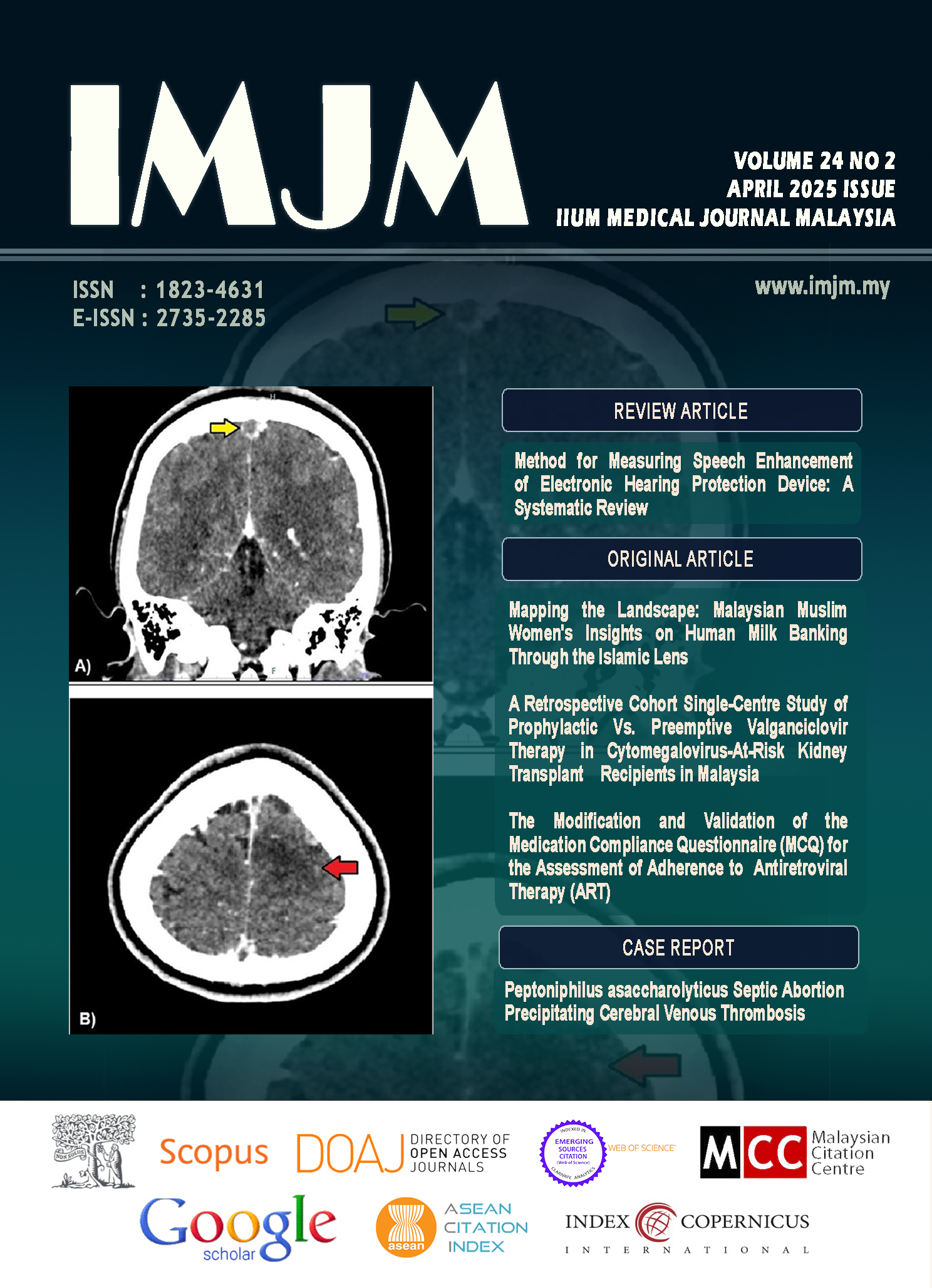
Peptoniphilus, a Gram-positive anaerobic coccus, is an opportunistic bacterium in the human microbiota. Obstetrics-associated Peptoniphilus asaccharolyticus infections are rarely reported, with only four reported cases, all patients recovered without complications. We describe a P. asaccharolyticus septic abortion at 8 weeks of gestation, complicated with cerebral venous thrombosis (CVT) and septic ileus. A 33 year-old Indonesian lady who is 8 weeks pregnant presented with sudden right-sided body weakness, with heavy vaginal bleeding and fever. She had attempted a self-induced abortion using over-the-counter medication prior to symptom onset. She was pale and septic. Besides evacuation of conception products, the patient was hospitalized for parenteral antibiotics therapy. Brain CT angiography revealed CVT. Anaerobic blood culture grew P. asaccharolyticus, identified via MALDI-TOF mass spectrometry. Her admission was complicated with septic ileus. Following eight days of antibiotics treatment, she requested a transfer to her hometown hospital for care continuation. P. asaccharolyticus is a disastrous organism to complicate septic abortions. Early clinical suspicion and prompt initiation of effective antibiotics are critical.
Downloads
Downloads
Published
How to Cite
Issue
Section
License
All material submitted for publication is assumed to be submitted exclusively to the IIUM Medical Journal Malaysia (IMJM) unless the contrary is stated. Manuscript decisions are based on a double-blinded peer review process. The Editor retains the right to determine the style and if necessary, edit and shorten any material accepted for publication.
IMJM retain copyright to all the articles published in the journal. All final ‘proof’ submissions must be accompanied by a completed Copyright Assignment Form, duly signed by all authors. The author(s) or copyright owner(s) irrevocably grant(s) to any third party, in advance and in perpetuity, the right to use, reproduce or disseminate the research article in its entirety or in part, in any format or medium, provided that no substantive errors are introduced in the process, proper attribution of authorship and correct citation details are given, and that the bibliographic details are not changed. If the article is reproduced or disseminated in part, this must be clearly and unequivocally indicated.